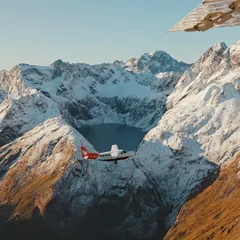
Wanaka: Milford Sound Glacier Flight & Scenic Nature Cruise
★ 4.9 · 86 reviews
- Leaves from Wanaka, not Queenstown
- Glaciers, Mt Aspiring and two national parks
- 86 reviews at 4.9
- A window seat for everyone
Photographs
This trip gives you two completely different photographic problems in one day. In the air you are shooting through glass from a vibrating airframe at a landscape moving past at two hundred kilometres an hour. On the water you are standing still in a trench with walls a kilometre high, where the light is six stops darker at the bottom than at the top.

Quick answer
In the air: shoot at 1/1000 or faster, hold the lens an inch clear of the glass, wear dark clothes and ask about the side at check-in. On the water: go straight to the bow, keep the starboard side for the way out because the waterfalls are on the northern wall, and expose for the sky or you will lose it. The one listing that guarantees everyone a window is the Wanaka departure at $454.
The flight half
Close to the glass, dark clothes, fast shutter.
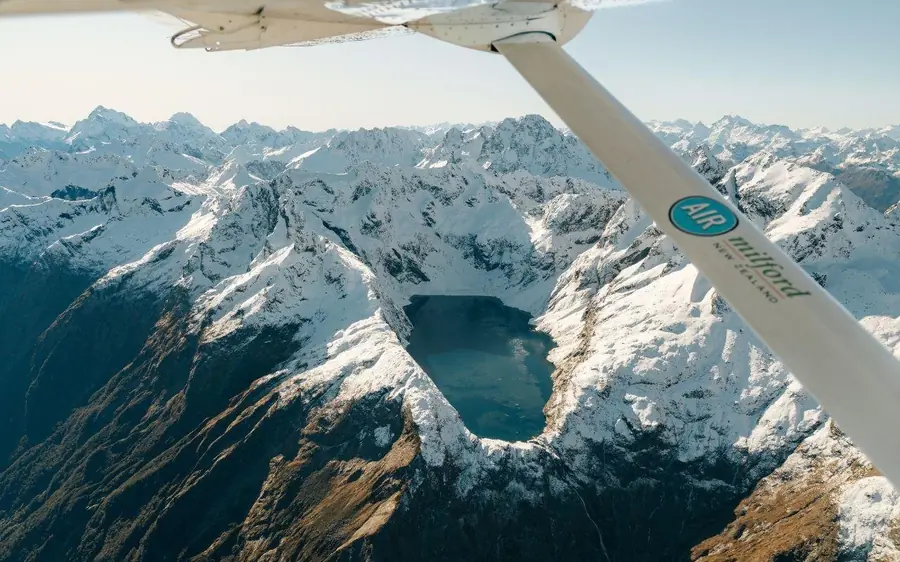
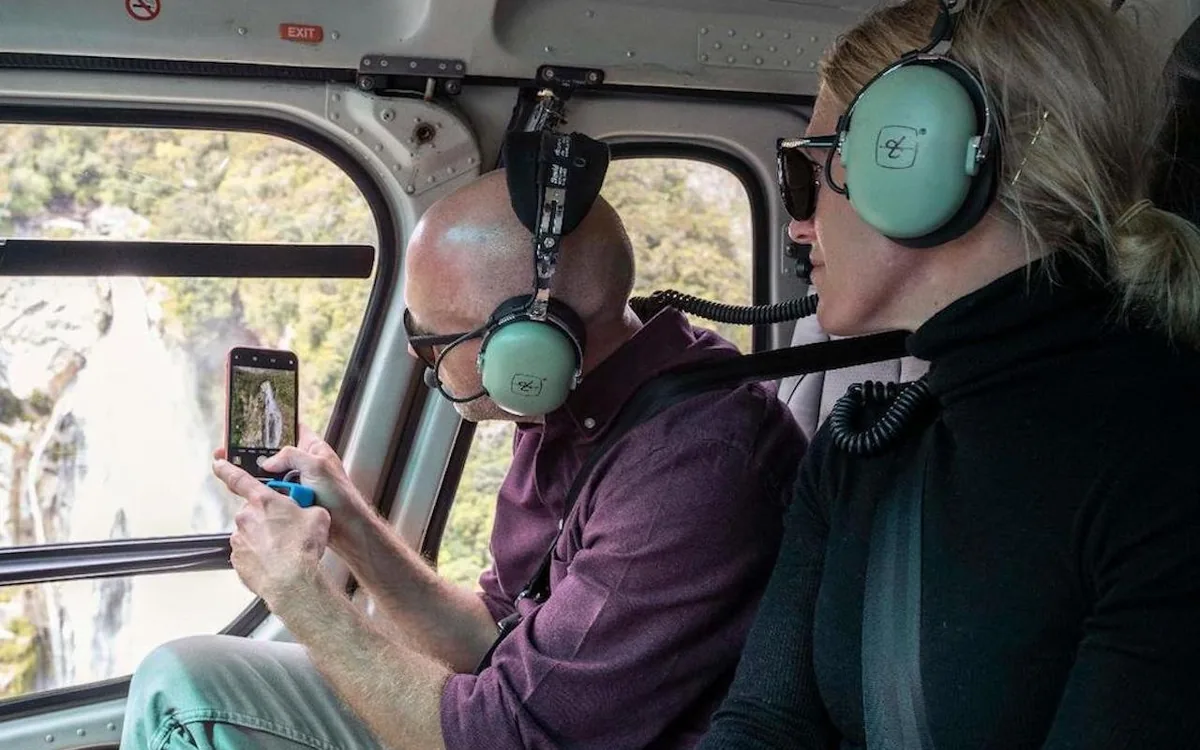
Get close to the glass, do not touch it. Contact transmits airframe vibration straight into the lens. An inch clear removes most reflections without the contact.
Wear dark clothes. A white sleeve is a light source pointed at the window, and it will appear across every frame of dark rock.
Shoot fast. 1/1000 is not about the ground moving; it is about the airframe vibrating. On a bright morning over snow it costs you nothing.
Leave the polariser off. Aircraft glass is curved and stressed, and a polariser turns that into visible bands across the sky.
Turn stabilisation off, or to the panning mode. Some systems hunt against the constant high-frequency vibration.
Ask at check-in, not at the aircraft. Seats are assigned by weight; a preference raised at the desk can sometimes be fitted inside the balance.
The cruise half
Expose for the sky. Stand at the bow. Keep starboard.
The exposure problem. The top of the wall is in sunlight and the bottom is in deep shade, and the difference is more than any sensor holds. Expose for the bright part and lift the shadows afterwards — a blown sky cannot be recovered and a dark wall can.
Where to stand. The bow, outside, and go there the moment you board. It is the first place to fill and the only one with a clear view forward.
Which side. Stirling Falls and most of the temporary waterfalls are on the northern wall, which is starboard on the way out to the sea. Cross the deck for the return.
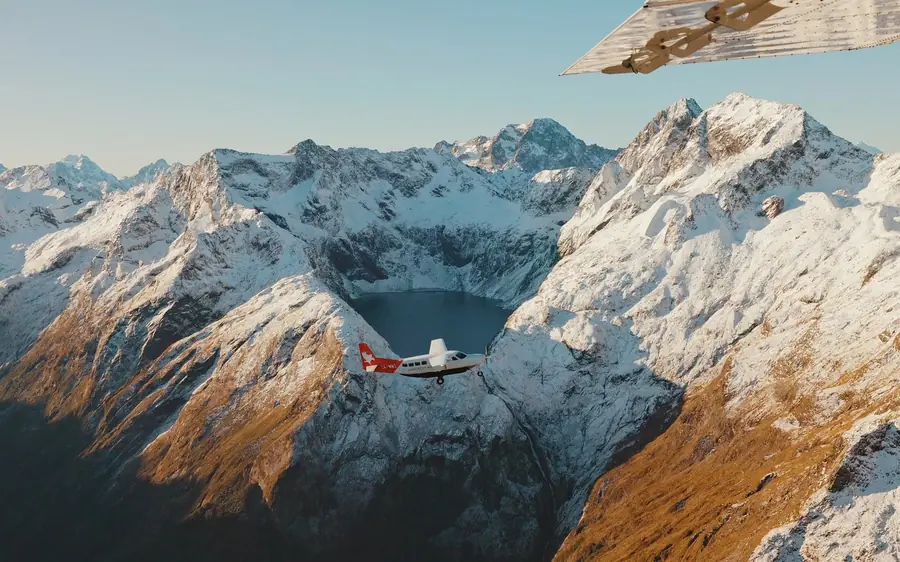
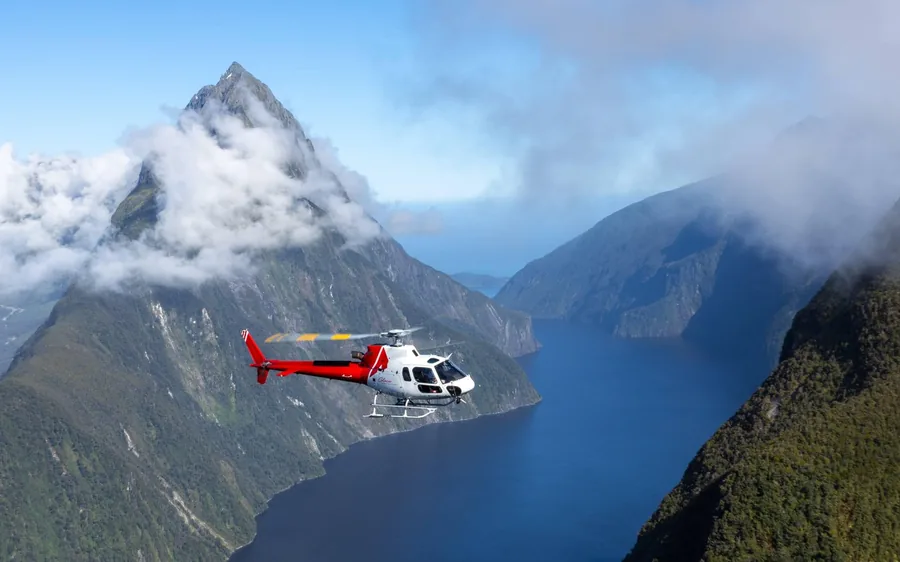
Scale. Aerial photographs of the fiord read as flat unless something gives the scale. Put the boat, another boat, or a person in the frame. Without it, a kilometre of rock photographs like a hundred metres.
Book direct
The one with a guaranteed window, the small boat, our top pick and the alpine landing.
★ 4.9 · 86 reviews
★ 5 · 278 reviews
★ 4.9 · 322 reviews
★ 4.9 · 196 reviews
Five mistakes that ruin Milford Sound flight and cruise photographs
None of them is about the camera body.
Transmits vibration directly into the lens. Hold it an inch clear.
They reflect into the glass and land on the darkest part of the frame.
The sky goes white and cannot be recovered. The wall can be lifted.
Two hours in a saloon with salt-streaked windows, when the deck is ten steps away.
Forty minutes is short. Shoot the first crossing, watch the second.
Common questions
The Wanaka departure at $454, for everyone. Most others assign seats by weight.
1/1000 or faster. Vibration matters more than ground speed.
Not in the air — curved aircraft glass turns it into banding. On the boat it helps with reflections on the water.
Starboard on the way out; the falls are on the northern wall.
No. Every listing on this page is a closed cabin.
The opposite. Hundreds of temporary waterfalls appear on the walls within an hour of heavy rain.
A shot list for the day
The lake, the glaciers, the descent, then scale.
First two minutes: Lake Wakatipu. Wide. The lake and the Remarkables together explain where Queenstown is, and the view is gone quickly.
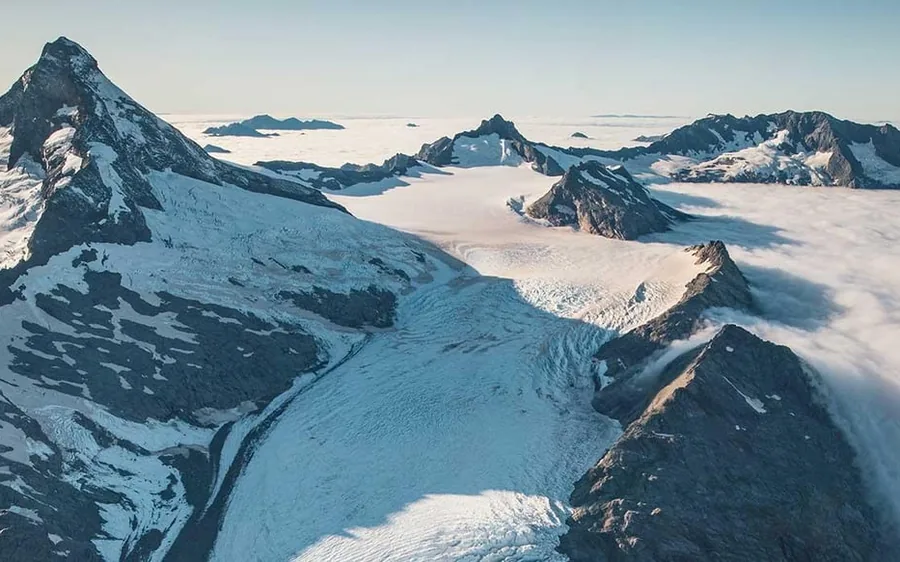
The crossing: the glaciers. Shoot down rather than out. The patterns in the ice and the hanging valleys are the subject, not the horizon.
The descent: the fiord opening up. The single best frame of the flying half, and it lasts about fifteen seconds. Have the camera ready before the aircraft turns.
On the water: scale. Put a boat or a person in the frame. Without something human-sized, a kilometre of wall photographs like a hundred metres.
Stirling Falls: fast shutter, and protect the lens. The spray reaches the deck, which is the point and also a hazard.
Settings, in one list
You will not have time to think once the aircraft moves.
Vibration, not ground speed. The most important setting on any Milford Sound flight and cruise.
Everything is at infinity; you are buying sharpness, not depth of field.
Let it float to keep the shutter fast.
Tracking a moving landscape through glass confuses subject detection.
The fiord has more contrast than any sensor holds. Raw is what lets you keep the sky and lift the wall.
For salt spray on the boat half.
In short
Seat, shutter, and where you stand on the boat.
Seat. Only one Milford Sound flight and cruise here guarantees a window for everyone — the Wanaka departure at $454. Everywhere else, ask at check-in.
Shutter. 1/1000 or faster in the air. The airframe vibrates on every Milford Sound flight and cruise, whatever the aircraft.
Position on the boat. The bow, outside, and starboard on the way out — the waterfalls are on the northern wall.
What to do with the files afterwards
Lift the shadows, kill the green, stop there.
Lift the shadows, do not touch the highlights. The fiord has more contrast than any sensor holds, and if you exposed for the sky the wall will be very dark. Raw files hold far more detail down there than they appear to; a shadow lift of one to two stops usually brings the rock back without noise.
Correct the green cast from the cabin glass. Aircraft windows are faintly green, and over a landscape that is already green the cast is easy to miss until you put the frame next to one shot from the boat. A small shift towards magenta fixes it.
Beyond those two, resist the urge to add saturation. Fiordland is already saturated, and pushing it is the single most common thing that makes a good photograph look like a postcard from 1987.
Go deeper
From $431 for the whole day, and what the helicopter adds.
The verdictTwelve combinations, and the four worth your money.
Road or airTwelve hours of coach against four and a half in the air.
Heli or planeWhat each one can do that the other cannot.
LandingsBeach, snow and alpine ridge — the stops no road reaches.
BookingWeights, weather rules and what sells out.