Milford Sound Heli-Cruise-Heli | 4.5-Hour Scenic Experience
★ 5 · 5 reviews
- Heli, cruise, heli — in that order
- Four and a half hours with an alpine landing
- Rated 5.0
- Free cancellation
Landings
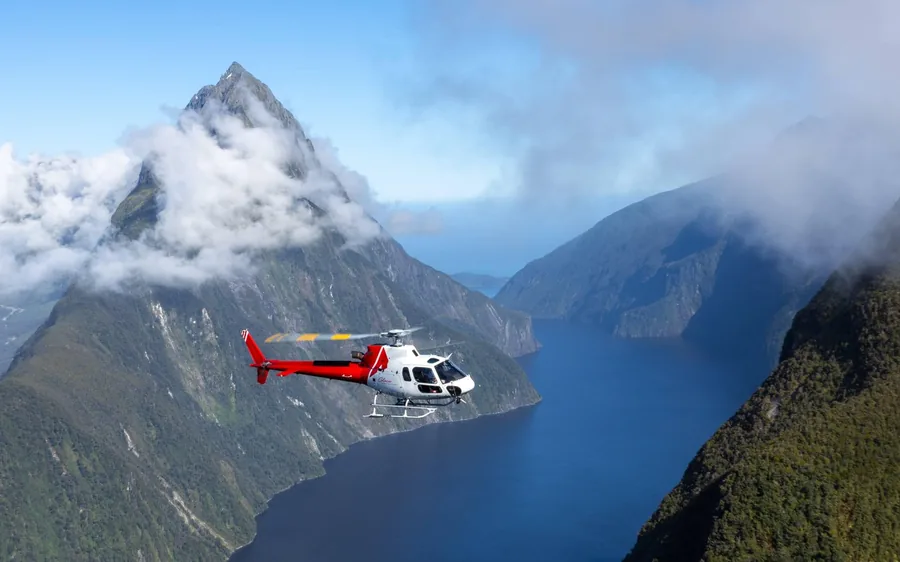
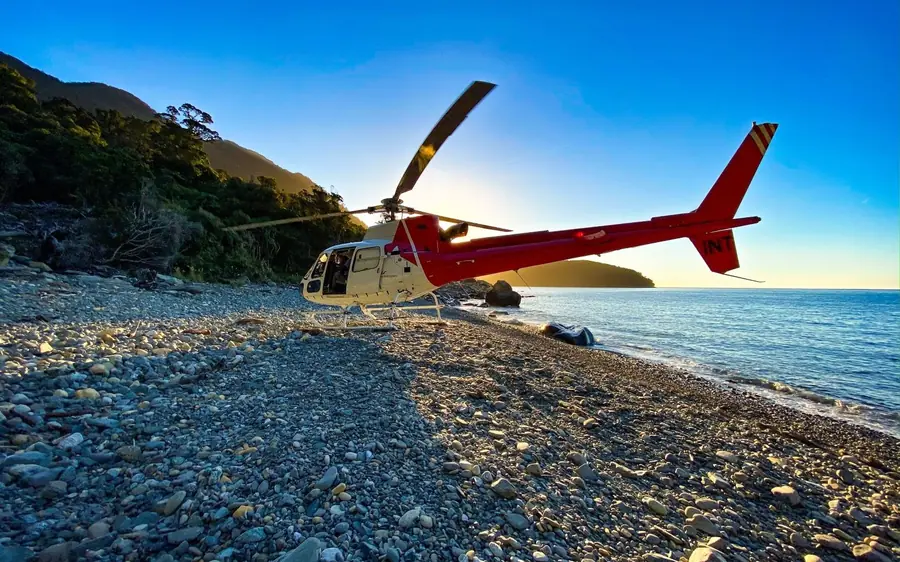
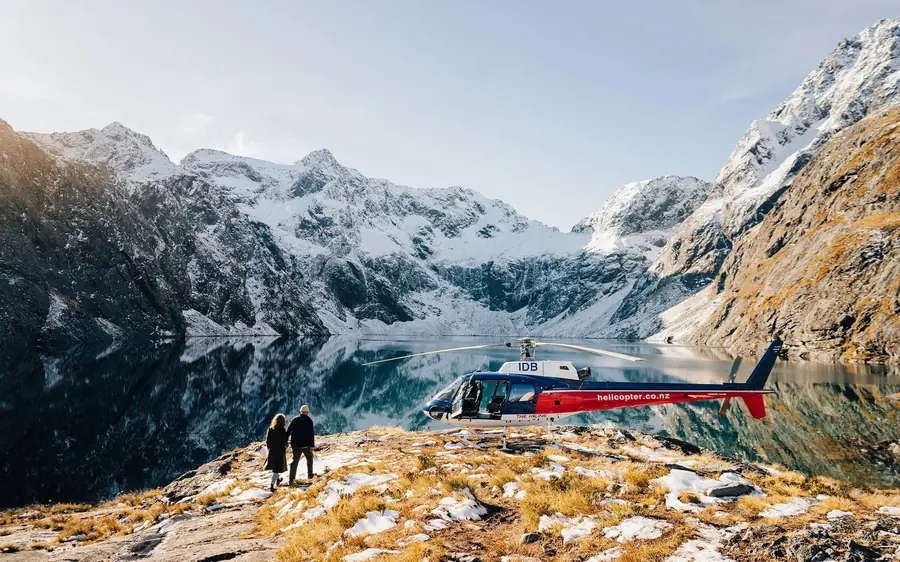
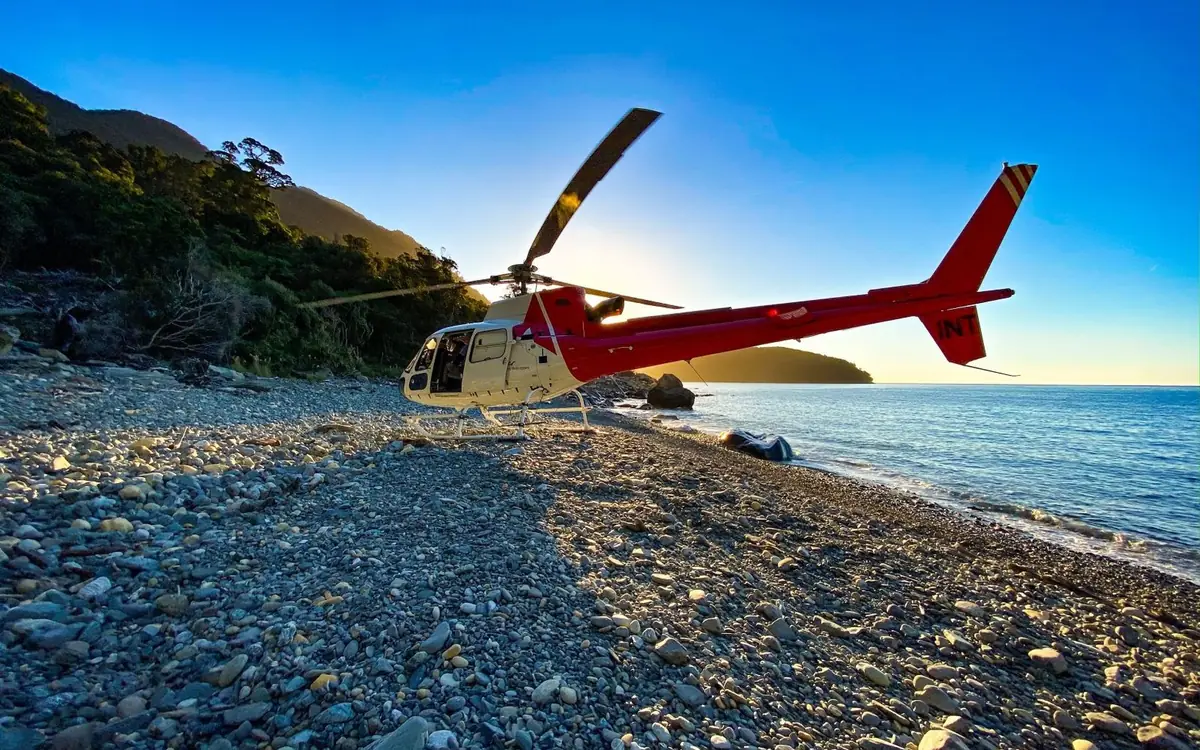
Three listings on this page put the aircraft down somewhere on the way, and all three are helicopters. One lands on the stony beach where the fiord meets the Tasman Sea. One lands on a snowfield or an alpine site above it. One does both, plus a landing in Milford itself. None of those places has a road, a trail or a boat to it.

Quick answer
The flight with three landings is $806 and takes two and a half hours — a landing in Milford, a nature walk, then the length of the fiord to the Tasman Sea and a landing on the beach, and a third on a glacier or an alpine site. The heli-cruise-heli at $953 adds an alpine landing to a full Milford Sound flight and cruise. The alpine tour at $808 does the same for less. A plane cannot do any of this.
What a landing actually is
Short stops in places nothing else reaches.
People imagine a picnic. It is shorter than that: the helicopter shuts down or idles, you get out, you have ten to twenty minutes, and you get back in. What makes it worth the money is not the length of time but where you are standing.
The beach. At the mouth of Milford Sound, where fifteen kilometres of fiord meet the open Tasman. The cruise boats turn around before this point; there is no road and no track. On a clear day you can see the swell coming in from the south-west.
The alpine site. A ridge or a snowfield above the fiord, usually between 1,000 and 2,000 metres. Silence, rock and, most of the year, snow. This is the one people describe most in the reviews.
Milford itself. On the three-landing listing, a stop and a short nature walk before the flight continues down the fiord.
Book direct
Heli-cruise-heli, the alpine tour, the three-landing flight, and the helicopter transfer for comparison.
★ 5 · 5 reviews
★ 4.9 · 196 reviews
★ 4.9 · 39 reviews
★ 5 · 34 reviews
Which of the three to take
The proven one, the longer one, and the one with the beach.
$808, four hours, 196 reviews at 4.9. The best-evidenced landing listing by a wide margin, and it includes the cruise. Our pick if you want a landing without gambling on a thin review count.
$953, four and a half hours, 5 reviews at 5.0. Heli, cruise, heli with an alpine landing. A newer listing doing the same thing with a little more time.
$806, two and a half hours, 39 reviews at 4.9. Three landings including the beach at the Tasman Sea — and no cruise. If the landings are the point and the boat is not, this is the one.
What to know before a Milford Sound flight and cruise that lands
None of them is difficult; all of them come up.
An alpine landing is cold. The temperature at 1,500 metres bears no relation to the temperature at the airport.
You are standing on rock or snow, not on a boardwalk.
Hats and scarves come off before you leave the cabin. Staff will say so; they mean it.
A helicopter has a tail rotor and it is invisible when it is turning. You go out and come back the way the pilot directs, from the front.
If the alpine site is closed in, the pilot will land somewhere else or not at all. This is not a reason to complain; it is the reason you got home.
Long enough for photographs and for the silence to register. Not long enough for lunch.
196 reviews at 4.9, four hours, and an alpine landing a plane cannot make.
Check dates for the alpine tour→Common questions
Three do, and all three are helicopters. A plane cannot land off an airfield.
At the mouth of the fiord, where it meets the Tasman Sea. The cruise boats turn back before that point.
Ten to twenty minutes at each landing.
The cruise and alpine tour at $808: 196 reviews at 4.9.
No. It is the one flight-only listing on this page, and we label it on every card.
The pilot lands somewhere else or skips the landing. Operators do not fly into cloud to keep a promise.
Why the landings cost what they do
Ten minutes of ground nothing else reaches.
Every listing here flies over the same fiord and cruises the same water. The three that land are charging for the ten to twenty minutes the aircraft is switched off, and that is a fair price for a fair thing: those places have no road, no trail and no boat to them.
The beach at the mouth is beyond the point where the cruise boats turn. Standing on it, you are looking at the Tasman Sea from inside the fiord.
The alpine site is a ridge or a snowfield above Fiordland, usually between one and two thousand metres. It is the quietest place most visitors to New Zealand ever stand.
If neither of those is the point of your day, a Milford Sound flight and cruise without a landing shows you the same fiord for half the money.
Three landings, compared in one line each
All three are helicopters; a plane cannot do any of it.
Four hours, 196 reviews at 4.9, cruise included, and a landing on a ridge above the fiord. The best-evidenced Milford Sound flight and cruise with a landing.
Four and a half hours with an alpine landing. Newer, with five reviews.
Two and a half hours: Milford itself, the beach at the Tasman Sea, and a glacier or alpine site. No cruise, which is why it is the odd one out on this page.
In short
The proven one, the longer one, the one without a boat.
Three listings land. The best evidenced is $808 — four hours, 196 reviews at 4.9, and it is a full Milford Sound flight and cruise with an alpine landing added.
$953 does the same thing with half an hour more and five reviews. $806 lands three times including the beach at the Tasman Sea, and is the one listing here that is not a Milford Sound flight and cruise at all — it has no boat.
If landing is not the point, every other Milford Sound flight and cruise on this page shows you the same fiord for less.
Go deeper
From $431 for the whole day, and what the helicopter adds.
The verdictTwelve combinations, and the four worth your money.
Road or airTwelve hours of coach against four and a half in the air.
Heli or planeWhat each one can do that the other cannot.
BookingWeights, weather rules and what sells out.
When to goMilford has 182 rain days a year, and that is the point.